Field EyepointIndependent Optical Data & Buyer Guidance
Optical Specification GuideField Glass Fundamentals

Comparing entry-level binoculars through published optical physics, not marketplace hype.

Navigating overseas listings means looking past exaggerated magnification numbers. This independent guide outlines objective lens sizes, exit pupil calculations, prism glass distinctions, and listing transparency cues so novice birders can compare specifications with clarity.

8x42Balanced hand stability and canopy twilight light transmission for woodland birding
10x42Extended reach for open wetlands and coastlines, requiring steady hand positioning
Sightline Guide

Exit Pupil & Habitat Pairing

5.25 mm
Dawn & Forest CanopyFormula: 42 ÷ 8. Delivers a wider light cone suited to low-light foliage observation.
4.20 mm
Open Shore & DaylightFormula: 42 ÷ 10. Compact exit beam matching standard daylight eye pupil size.
Beginner Birdwatching Binoculars: Optical Field Guide and Marketplace Analysis Beginner Birdwatching Binoculars: Optical Field Guide and Marketplace Analysis Beginner Birdwatching Binoculars: Optical Field Guide and Marketplace Analysis
Specification Framework

Four published criteria to check before choosing budget optics

Compare stated manufacturer datasheets against these four physical benchmarks to identify realistic field optical profiles.

01

Prism Glass Composition: BaK-4 vs. BK-7

Barium crown glass (BaK-4) delivers higher refractive efficiency. Borosilicate (BK-7) prisms typically produce internal light falloff around edges, visible as squared-off exit pupils in peripheral foliage.

Listing check to look for:Confirm explicit BaK-4 designation in product notes rather than vague optical glass labels.
02

Coating Layers: Fully Multi-Coated (FMC)

Uncoated air-to-glass surfaces reflect incoming light. Entry-level birding optics with multi-coatings on all glass interfaces preserve image contrast against bright skies.

Listing check to look for:Look for Fully Multi-Coated (FMC) instead of single-layer coated claims.
03

Eye Relief & Eyecup Mechanism

Eyeglass wearers typically need 15mm to 18mm of eye relief to capture the full picture window. Multi-position twist-up eyecups maintain stable alignment compared to simple rubber fold-downs.

Listing check to look for:Confirm eye relief listed in millimeters and check whether eyecups twist or fold.
04

Field of View: Angular vs. Linear Metrics

A wider field of view helps locate active songbirds across dense branches. Standard 8x optics typically deliver 6.5° to 8.1° of view, whereas high zoom multipliers narrow this window significantly.

Listing check to look for:Check that angular degrees and linear meters at 1000m match standard optical conversion ratios.
Field Scenarios

Matching your primary birding habitat to optical geometry

Every optical configuration involves natural trade-offs. Select the profile that best matches your usual observation surroundings.

Woodland & Garden

The 8x42 Configuration

  • Generous 5.25mm exit pupil keeps songbirds visible under early morning tree canopy.
  • Lower tremor magnification eases visual fatigue during continuous hand-held scanning.
  • Broad field of view simplifies following fast-flitting warblers across short distances.
Inherent Trade-off:Moderate image scale when identifying distant shorebirds across open water.
Raptors & Open Shore

The 10x42 Configuration

  • Closer image scale aids identification of perched raptors, waders, and waterfowl.
  • Standard 4.2mm exit pupil provides sufficient brightness under open daylight conditions.
  • Compatible with standard tripod adapters for stationary wetland viewpoints.
Inherent Trade-off:Natural hand tremors appear larger; narrower sightline when scanning foliage.
Travel & Day Treks

The 8x32 Compact Form

  • Lower pack weight for long days along mountain trails and travel excursions.
  • Retains the broad angular viewing field characteristic of 8x magnification optics.
  • Comfortable chassis dimensions for smaller hands or younger observers.
Inherent Trade-off:Compact 32mm front lenses yield a 4.0mm beam, softening contrast at dusk.
Marketplace Cues

Listing indicators to review before buying online

Online optical listings often present marketing exaggerations. Keep these reference points in mind when reading product specifications.

Listing Cue 01

Extreme Zoom Ratios (e.g., 20-180x100)

Handheld birding relies on fixed magnification. Variable zoom mechanisms in entry-tier binoculars typically restrict light transmission and result in narrow, tunnel-like views.

Listing Cue 02

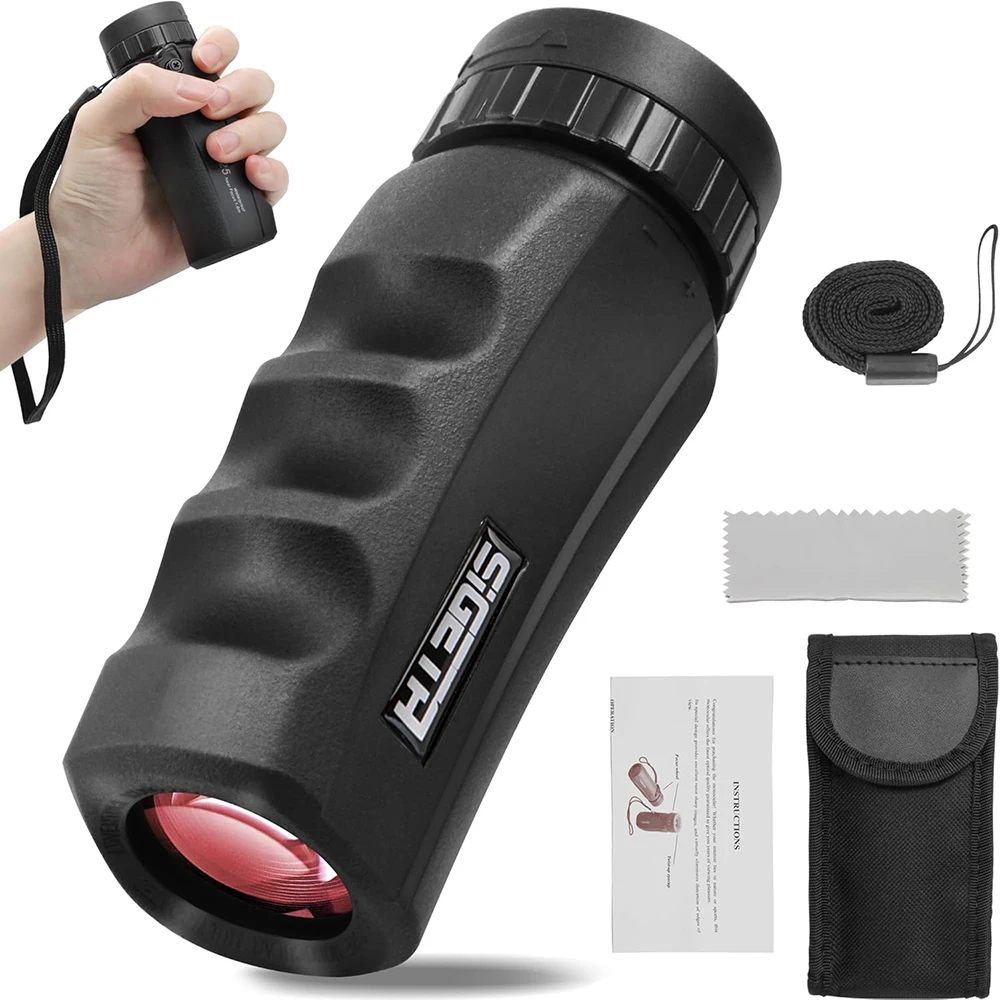
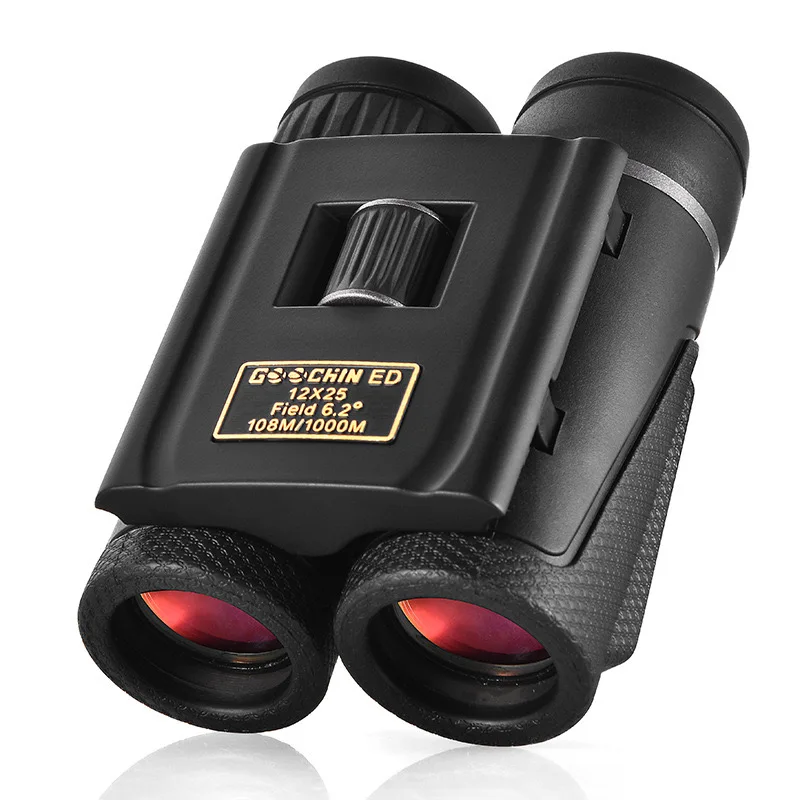
Ruby or Red-Tinted Front Lens Coatings

Reflective red mirror coatings can mask color distortion by blocking parts of the color spectrum, tinting bird plumage and diminishing dawn light transmission.

Listing Cue 03

Missing Technical Dimension Tables

Informative optical listings provide complete dimension tables showing weight, linear field of view, close focus distance, and eye relief in millimeters.
Recent Articles

Editorial Approach & Specification Scope

The Eyepoint Sightline Folio is an educational buying guide based on published manufacturer datasheets, optical geometry formulas, and marketplace listing information. We do not conduct laboratory testing or issue laboratory certifications. We encourage readers to review published specifications and vendor return terms carefully before making gear decisions.

This site contains affiliate links. We may earn a commission at no extra cost to you.