Deconstructing Optics for the Field Observer
Stepping into birdwatching often begins with an overwhelming encounter with optical numbers, coating acronyms, and marketing promises. An aspiring observer scanning dense woodland canopies for warblers requires a vastly different optical profile than someone identifying resting waterfowl across open mudflats. Without understanding how magnification, objective lens diameter, and prism glass interact, beginners frequently end up with optics that produce dim imagery, induce hand tremor, or cause severe eye fatigue.
This advisory deconstructs entry-level glass to help you select an instrument suited to your observation environment. By auditing technical specifications, calculating optical physics, and reviewing global marketplace metrics, we clarify the trade-offs between pocket-sized convenience and full-sized light gathering.
The Four-Point Field Verification Framework
Calculate the Physical Exit Pupil
Divide the objective diameter by magnification (e.g., 42mm ÷ 8x = 5.25mm). An exit pupil below 3mm degrades viewing in shaded woodlands. Target 4mm to 5.25mm for dawn and dusk versatility.
Verify Eye Relief and Eyecup Design
Eyeglass wearers require at least 15mm of eye relief paired with twist-up eyecups to preserve the complete field of view without dark peripheral blackouts or vignetting.
Audit Prism Glass and Optical Coatings
Prioritize BaK-4 glass over BK-7 to avoid edge light loss. Verify multi-coated or fully multi-coated (FMC) lenses, and reject reflective ruby coatings that distort natural plumage colors.
Inspect Seller Metrics and Return Logistics
Ensure the merchant maintains established feedback and transparent return terms. Delicate prism assemblies require buyer protection against optical collimation misalignment sustained in transit.
Evaluated Field Optics


Matching Optical Profiles to Field Habitats
The Serious Naturalist
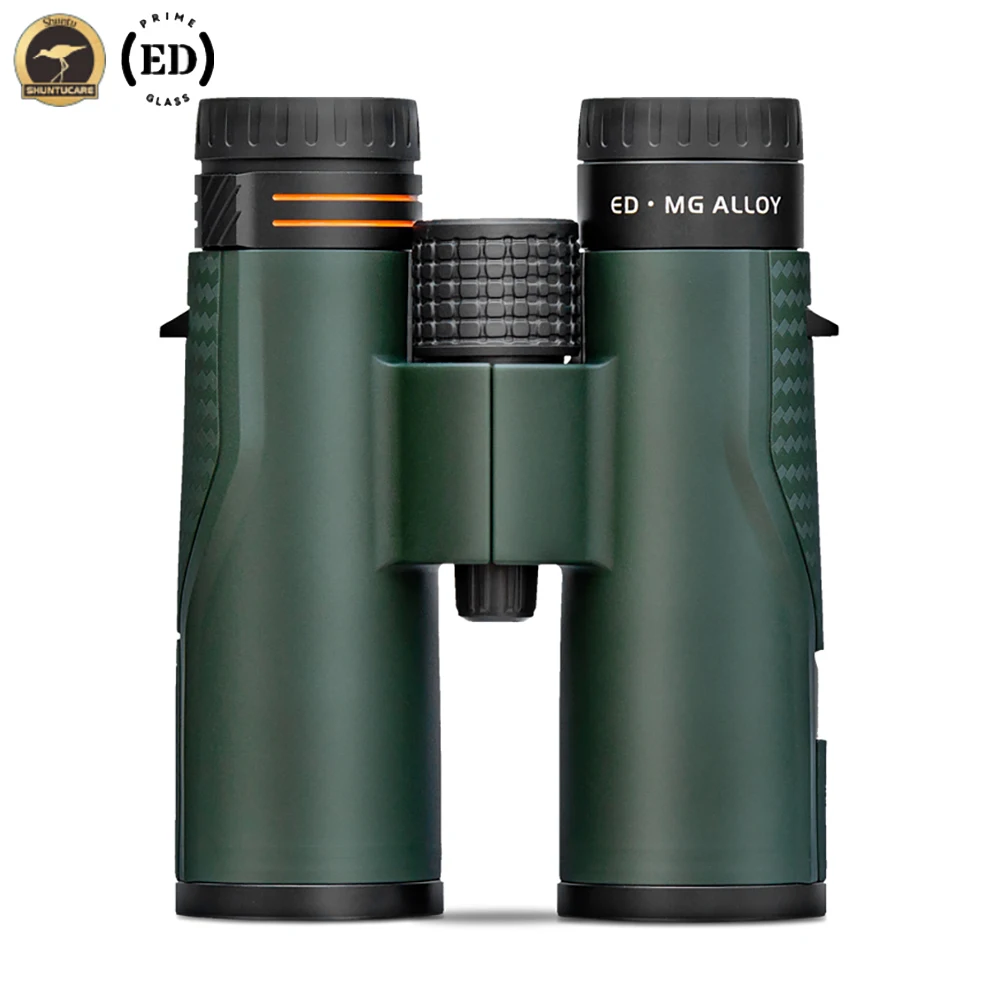
Choose full-size 42mm ED optics for color fidelity and essential light gathering in dense forest canopies and dawn songbird surveys.
Shuntu 8X42 10X42 ED Binoculars for Adults High Powered Super Bright Clear Lightweight Binocular For Bird Watching Hiking TravelThe Fast-and-Light Hiker
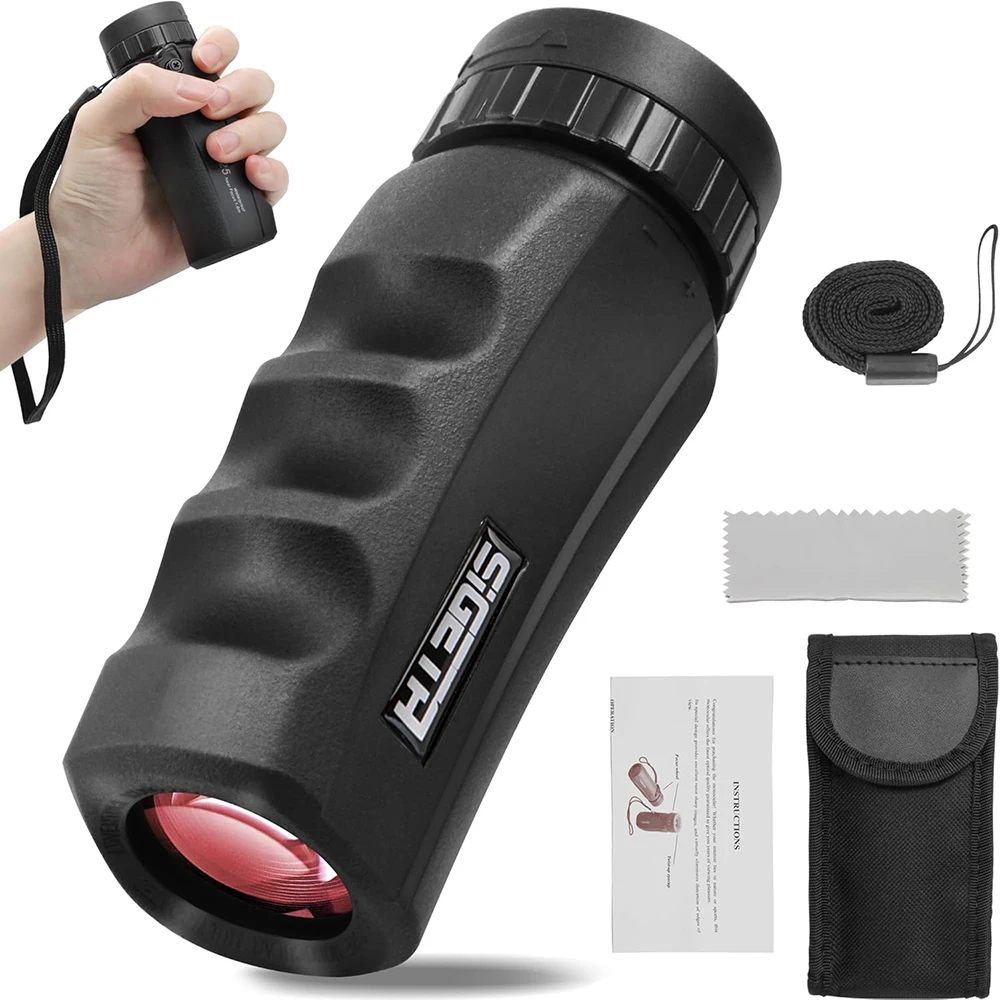
Choose compact folding pocket glass or an 8x monocular for rapid trail mark identification with minimal pack weight penalty.
8x25 Monocular HD Telescope Outdoor Mini Pocket Compact Binoculars Waterproof for Bird Watching Hunting Camping Hiking TravlingSmall Pocket Binoculars Compact Adults Mini Kids Binoculars Boys for Bird Watching Concert Theater Opera Watching Shows TourismThe Distance Observer on a Budget
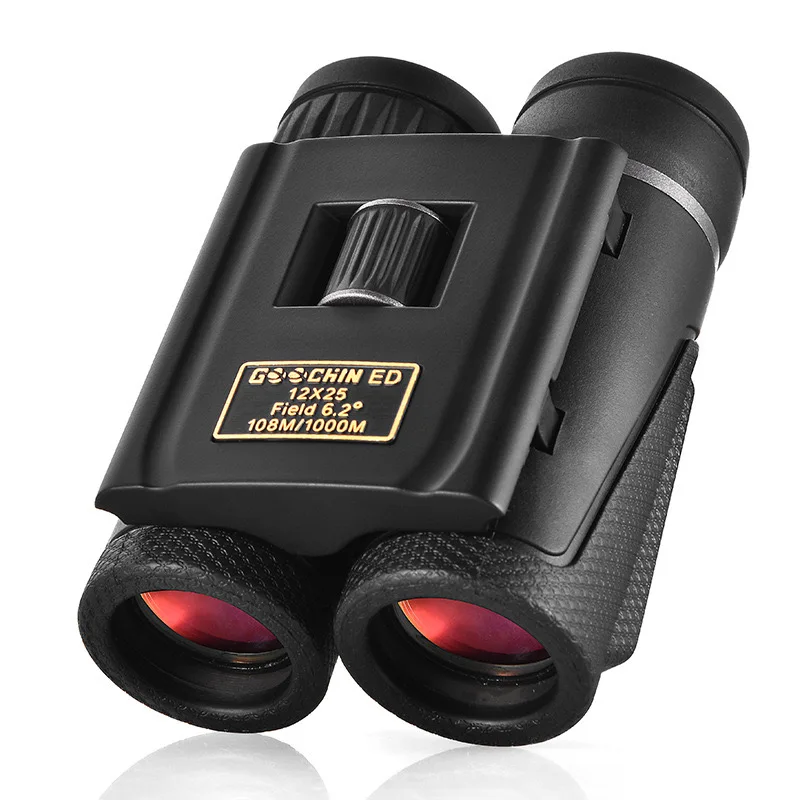
Select high-magnification compacts for open water and sunny mudflats, using arm bracing to mitigate natural hand tremors.
High Powerful 12x25 Compact ED Binoculars for Adults and Kids with Large Eyepiece Easy Focus Binoculars for Bird Watching TravelThe Junior Explorer
Utilize low-power, wide exit pupil optics that allow effortless eye positioning and tremor-free viewing during family nature walks.
Compact Binoculars 2.5x26 Pocket Telescope For Children Mini Pocket Gift For Kids Anti-skid Bird Outdoor Travel PortableOptical Trade-Offs and Performance Matrix
| Product | Twilight Light Gathering | Color & Fringing Control | Handheld Image Stability | Chassis Portability |
|---|---|---|---|---|
| Shuntu 8X42 10X42 ED Binoculars for Adults High Powered Super… | 9 | 9 | 8 | 5 |
| High Powerful 12x25 Compact ED Binoculars for Adults and Kids… | 3 | 6 | 4 | 9 |
| Small Pocket Binoculars Compact Adults Mini Kids Binoculars… | 4 | 4 | 7 | 10 |
| 8x25 Monocular HD Telescope Outdoor Mini Pocket Compact… | 5 | 5 | 8 | 9 |
| Compact Binoculars 2.5x26 Pocket Telescope For Children Mini… | 8 | 2 | 10 | 9 |
Optical Realities and Inherent Limitations
- Compact binoculars with 21mm to 25mm objectives suffer severe light falloff during dawn and dusk, the prime hours of avian activity.
- Sub-$50 entry-level optics routinely exhibit optical astigmatism, field curvature, and noticeable edge softness in the outer frame.
- Dual-barrel prism instruments shipped through global transit networks carry collimation risks that can cause immediate eye strain or double vision.
Eyepoint Advisory Recommendation
Invest in a full-sized 8x42 ED platform for committed identification, reserving sub-30mm compacts exclusively for high-noon trail travel.
The 5.25mm exit pupil and extra-low dispersion glass provide vital color fidelity and light transmission under shaded canopies that compacts cannot match.
Optical Audit Methodology
Known facts
Magnification factor and objective lens diameter mathematically determine the physical exit pupil and twilight performance.
Extra-low Dispersion (ED) glass aligns spectral wavelengths to diminish chromatic fringing along high-contrast lighting boundaries.
Exit pupils under 3mm restrict light delivery to the eye and demand precise ocular alignment to prevent blackout rings.
Analysis
Specifications were evaluated against optical physics principles to compute exit pupils, relative brightness, and shake vulnerability.
Marketplace merchant profiles and verified customer ratings were audited to identify build inconsistencies and transit collimation risks.
Uncertainties
Transit impact shocks can knock optical barrels out of parallel alignment regardless of factory quality control.
Budget-tier optics may display sample-to-sample variance and peripheral edge softness in the outer 10% of the viewing field.
Frequently Asked Questions
Why is an 8x magnification generally recommended over 10x or 12x for beginners?
An 8x magnification strikes an optimal balance by providing a wider field of view, making it easier to track active songbirds in foliage. It also minimizes hand-shake blur and yields a larger exit pupil for brighter images in low light.
What does ED glass actually do for birdwatching?
Extra-low Dispersion (ED) glass uses specialized formulations to focus light wavelengths onto the same focal plane. This prevents color fringing on high-contrast subjects, such as an eagle against a bright sky, preserving true plumage detail.
Can I comfortably use compact binoculars while wearing eyeglasses?
Only if the binocular provides at least 15mm (ideally 16mm to 18mm) of eye relief alongside retractable eyecups. Compact models with eye relief under 12mm force the eye too far back, cutting off outer edges and causing dark shadows.